
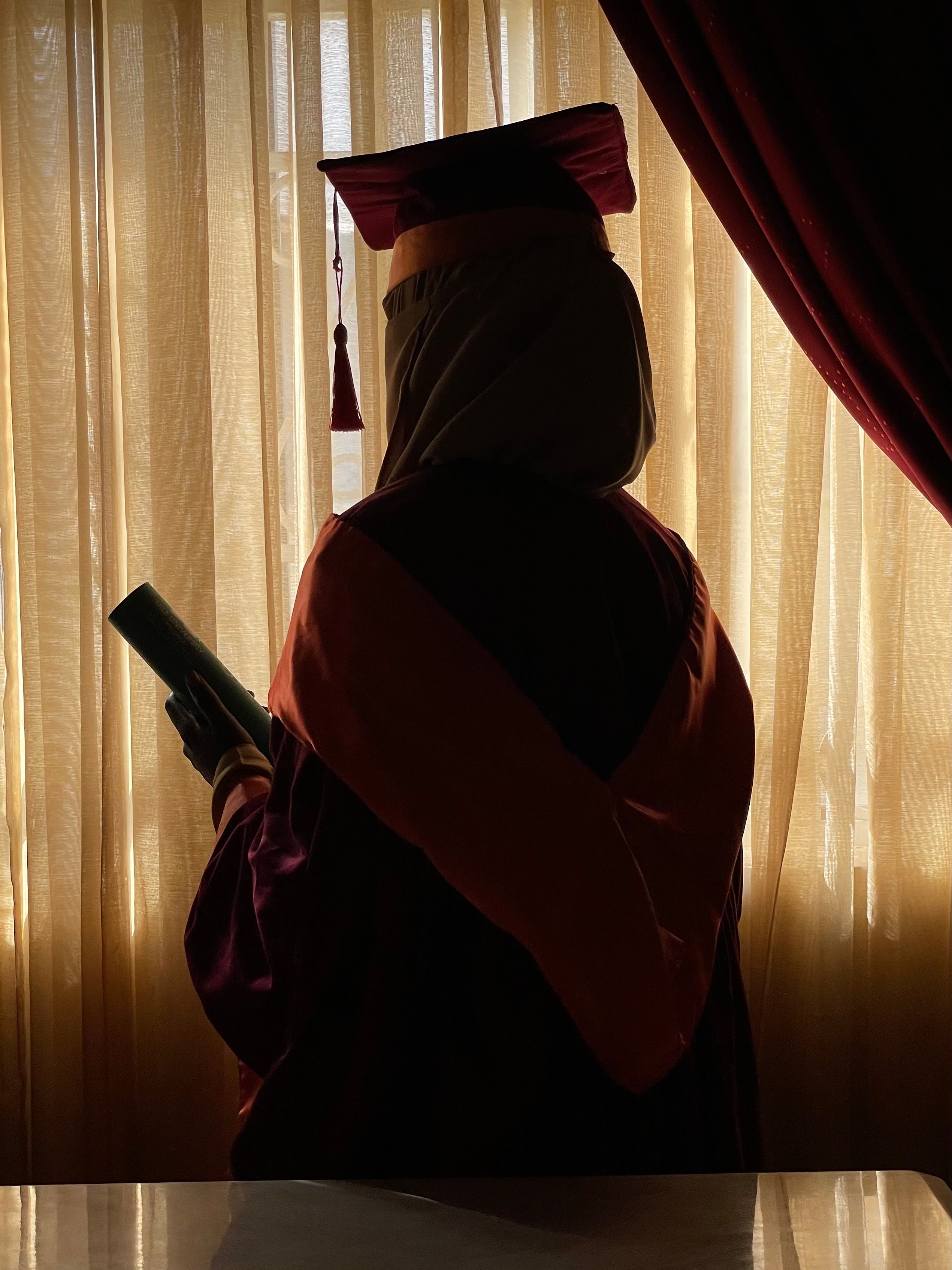
I graduated!

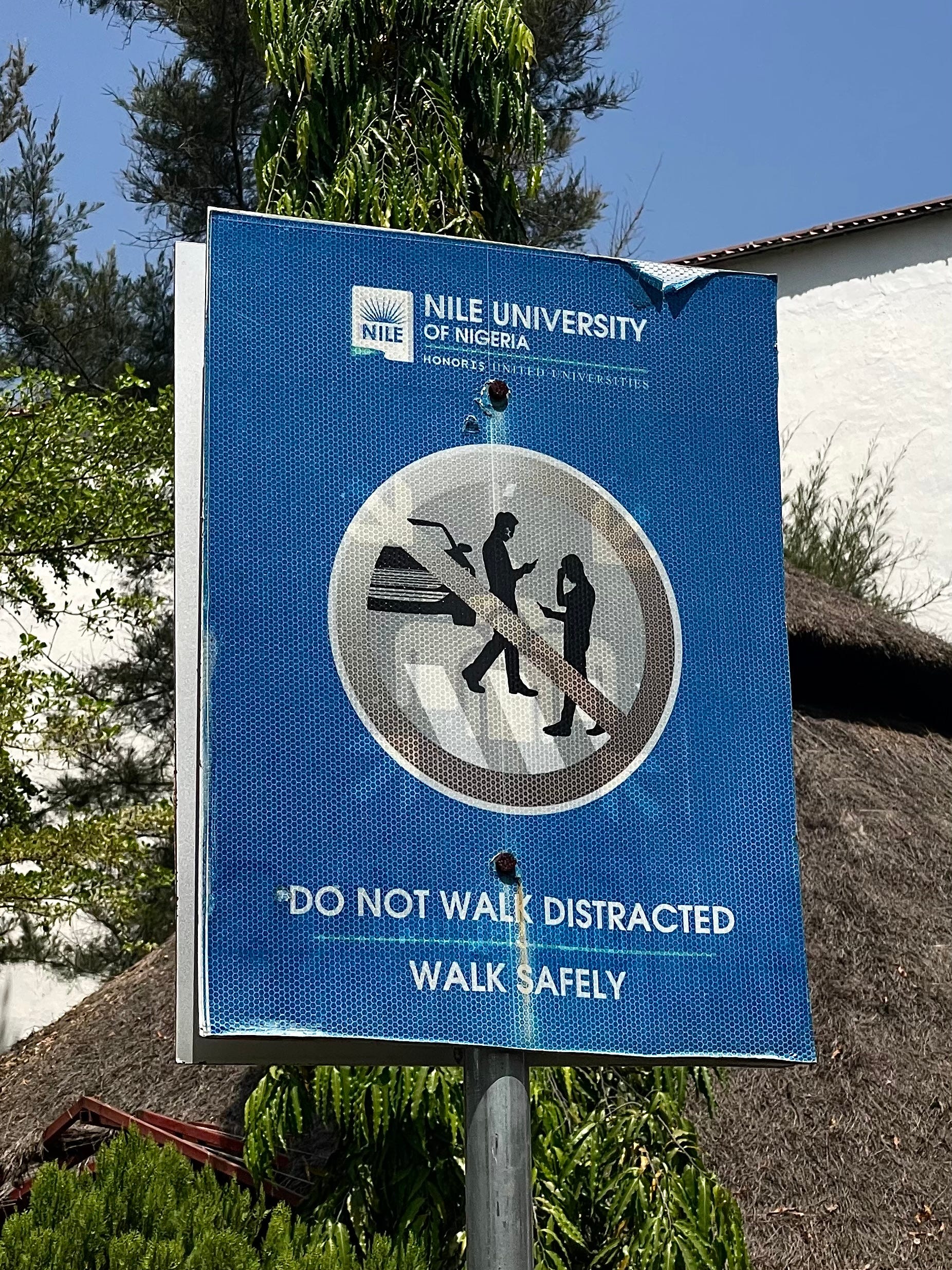
Exactly a week ago, I was on campus in preparation for today—my graduation. As I walked down the walkway, I observed something that wasn’t really new, but this time with more concern after knowing what I now knew through research. Half the people walking had their heads jutting forward, faces looking down, one hand at chest level, holding, of course, their mobile phones, doing exactly the opposite of what the sign below advises:
Kuss and Griffiths (2017) define social media addiction as a compulsive and excessive engagement with social networking platforms that leads to difficulty controlling usage, neglect of responsibilities, and emotional distress. Even though the DSM-5 doesn’t classify it as an official disorder, its symptoms closely resemble those of other behavioral addictions. See if any of these sound familiar:
You’re in the middle of a serious task, then suddenly start to wonder if your last Instagram story has a reply yet.
You open your phone to look up a word and somehow snap back into real life three hours later, deep inside a stranger’s vacation video.
The moment your data finishes, your mood follows. Suddenly, the whole world feels personally unavailable.
You avoid a real-life conversation but somehow have the energy to reply to a meme in five seconds.
Preoccupation. Loss of control over usage. Withdrawal symptoms.
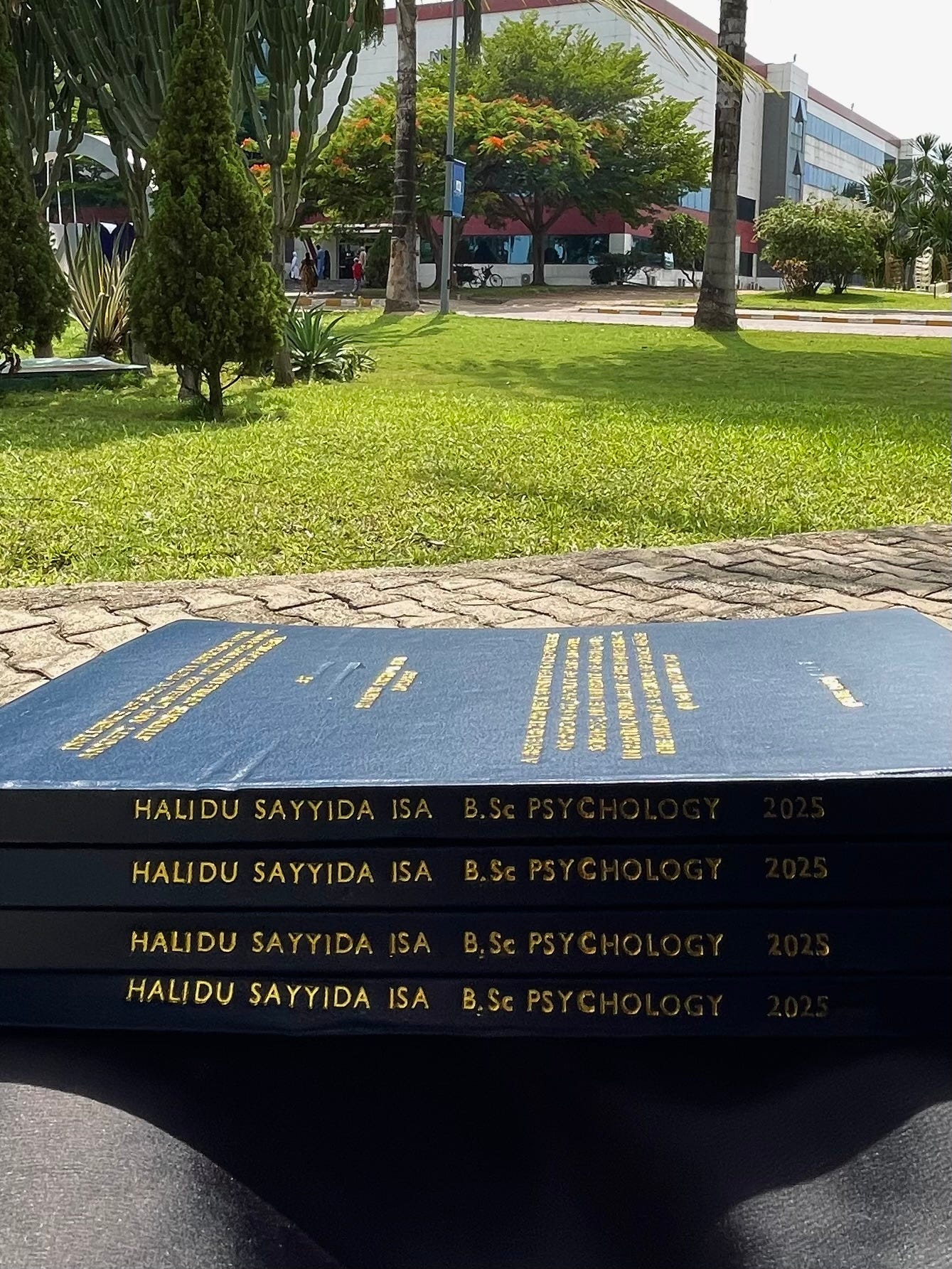
And the last one, social withdrawal and isolation, which closely summarizes my research project—the influence of social media addiction on social anxiety and loneliness.
According to the DSM-5 (American Psychiatric Association, 2013), social anxiety is a persistent fear of one or more social or performance situations where a person feels exposed to scrutiny or judgment.
In my study, students who scored high on social media addiction also scored high on social anxiety measures. About 62% reported feeling nervous or self-conscious in real-life social settings, yet said they felt “more confident” online—a false safety net. The same students who thrived behind a screen often avoided eye contact in person, skipped social events, or second-guessed their words. As Vannucci, Flannery, and Ohannessian (2017) found, digital comfort can mask real-world discomfort. We call it “social” media, but for many, it’s a space where social fear hides in plain sight. So what does social anxiety look like?
rehearsing your name in your head, just in case you forget
if attending is optional, you’re automatically not going
you replay a two-second interaction for three business days
you want friends, but you also want to stay home
Guess where that eventually leads. Yep. My third variable—loneliness.
Perlman and Peplau (1981) describe loneliness as the unpleasant experience that occurs when one’s social relationships lack depth or satisfaction. Nearly two-thirds of my respondents who used social media excessively reported feeling lonely, despite being “connected” to hundreds (sometimes thousands) of followers. Olumide et al. (2022) found similar results: the more addicted students were to social media, the lonelier they felt.
Weiss (1973) explains that loneliness isn’t just “being alone,” and it’s definitely not solved by buying a new item and calling it “self-care.” He breaks it into two distinct types:
Emotional Loneliness
“I’m laughing with everybody, but nobody here is the person I’d call when life starts lifing.”
Emotional loneliness is the ache of not having that one close, supportive person to confide in, leaving you feeling isolated even when you’re not physically alone.Social Loneliness
“I’m in the group photo, but not in the group.”
It is the feeling of not belonging to a group or community, where you’re surrounded by people yet still feel like you have no circle to fit into or share life with.
If your screen time didn’t scare you enough, I hope this has. So, what’s the way forward?
Try a digital detox: set screen-time limits (resist the urge to hit “ignore”), pick specific check-in hours, and please stop scrolling at 2 a.m. even if you can’t sleep.
Use social media mindfully by checking your emotional triggers, logging in with a purpose, and unfollowing or muting anyone you compare yourself to.
Touch grass. Swap some of your scrolling time for actual hobbies or human interaction.
Utilize tools like Focus Mode, app timers, and screen-time reports.
If it is really bad and you really can’t help yourself, talk to a professional—not me. I’m not licensed yet.
Don’t give up. Keep trying.
Seek help from Allāh. Make the intention and make du’ā—He’s All-Hearing.
Try to make the most of 5 before 5.
Love,
Sayyida IH, B.Sc. Psych.
Allahumma Barik Sayyidah, may Allah bless this for you and grant you all the khair that comes with it. Currently on a social media break for a few weeks and this topic of yours couldn’t be more timely. May Allah grant us ease and the ability to take advantage of 5 before 5…Aameen.
🩶